Originally published on JewishBoston.com.
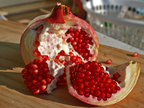 A few years ago, the pomegranate exploded on the food scene as the in fruit of the moment. From the juice aisle to the bar, it was hard to avoid the bright red color of the pom. Oprah even declared the Pomegranate Martini as one of her favorite drinks!
Although it’s as difficult to prepare as it is to spell, the flavorful seeds and much-hyped health benefits of the fruit have brought it into the mainstream. Naturally, there’s now an official Pomegranate Council promoting all these benefits and more on behalf of the California farmers who produce pomegranates in the USA.
 But it turns out the mainstream was just catching up with something Jewish tradition already knew. We’ve held the pomegranate in high regard for quite a while — since the time of the Bible, in fact! Pomegranates have been a feature of Jewish art as well as cuisine for generations. In fact, the adornments some synagogues place on the handles of Torah scrolls are even called rimonim in Hebrew — that would be “pomegranates” in English!
Pomegranates have a particular connection to Rosh Hashanah. According to About.com:
On the second night of Rosh Hashanah, we eat a “new fruit” – meaning, a fruit that has recently come into season but that we have not yet had the opportunity to eat. When we eat this new fruit, we say the shehechiyanu blessing thanking God for keeping us alive and bringing us to this season. This ritual reminds us to appreciate the fruits of the earth and being alive to enjoy them.
A pomegranate is often used as this new fruit. In the Bible, the Land of Israel is praised for its pomegranates. It is also said that this fruit contains 613 seeds just as there are 613 mitzvot. Another reason given for blessing and eating pomegranate on Rosh HaShanah is that we wish that our good deeds in the ensuing year will be as plentiful as the seeds of the pomegranate.

I remember back in my Hebrew School days participating in an activity with my classmates where we tried to count all 613 seeds of the pomegranate. It was messy and not entirely successful, but fun enough that I remember it more than two decades later.
This year, I learned that there’s also a mystical connection between the pomegranate and Rosh Hashanah – it’s one of the simanim, or good omens, that Jewish superstition associated with loading the odds in our favor for a good year. We’ll have more about the simanim in an upcoming blog post.
Do you have a favorite recipe for enjoying pomegranates? Please share it in the comments below!
Pomegranate photo by Fir0002/Flagstaffotos, used under the GFDL license.
Torah photo by Dan Simhony.
Postage stamp photo by Karen Horton.

 David Levy