Fynsworth Alley: Interview with Emily Skinner

Originally published on Fynsworth Alley.
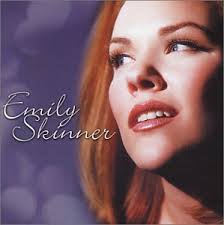
emily skinnerEmily Skinner needs no introduction. Currently wowing audiences nightly in The Full Monty on Broadway and with her eponymous solo album, Emily is an entertainment powerhouse. Of course, she’s also known for her Tony-nominated performance in Side Show, her memorable roles in A Christmas Carol and James Joyce’s The Dead, and her two CDs with Side Show pal Alice Ripley, Duets and Unsuspecting Hearts.

DL: I’m sure everyone’s curious to hear about the new album, so let’s start there and work backwards through your career. Why is this one an “Emily Skinner” album instead of a Duets album?

ES: You’d have to ask Bruce about that. He approached me back in the spring about a solo album. I think the original concept was to do my album and Alice’s album, and have each of us sing on the other’s solo album. And I don’t know if Alice is eventually going to do one – I know she’s sort of insane right now, working on her own pop album. But I think that’s the plan. My schedule just allowed the time to do it this summer, so I thought, “let’s go ahead.”

DL: Did you let Alice help pick the duets?

ES: Actually, Bruce picked a lot of the duets. He picked “You’ll Never Get Away From Me,” and he suggested that we should do something from The Dead, so we picked “Ballyshannon.” Alice and I picked the one from Personals because we had actually done that one before.   Continue reading
Fynsworth Alley: Michelle Nicastro: Still Toonful After All These Years

Originally published on Fynsworth Alley.

Michelle Nicastro

Michelle Nicastro has a wide array of credits that span television, film, Broadway, recording, and beyond. Michelle made her Broadway debut in the not-so-magical Merlin. She was there When Harry Met Sally. She made soap bubbles in Santa Barbara. She won audience and critical acclaim for her year and a half as Eponine in the Los Angeles company of Les Miserables, and she even dubbed the singing voice of “Callisto” for the memoralbe “Bitter Suite” episode of Xena. All the while, she was recording four albums with Bruce Kimmel: Toonful, Reel Imagination, Toonful, Too, and On My Own.

DL: Let’s start talking about how you got into show business. You do so many different things – television, movies, music… When you started, did you have an idea that you wanted to do any one specific thing?

MN: To be honest with you, I was kind of confused. I didn’t know quite which way to go, and I remember I was looking at colleges and I thought about maybe going into the music department. However, even though I had studied some opera, I really didn’t want to become an opera singer, and that was really all they offered at these schools. And I remember talking to a person at Northwestern University, where I eventually ended up going, and they said, “Well, you really have to think. Do you want to be a singer who acts or an actor who sings?” That just brought it into focus for me, and I thought I’d rather be an actor who sings. That way it could help me in a lot of different directions.

So, I wound up going to Northwestern and getting a theatre degree there – not a musical theatre degree, just a regular theatre degree. I studied a lot of acting and really studied no singing at all there, to be honest with you. But I think what has always been good for me is trying to dabble in a lot of little things. That has kept me afloat because, you know, when you can’t sing, I’ll do a little movie here or tv, and then some singing here. The path life can lead you on is very strange, and you can just allow it to take you to different places. Continue reading

Fynsworth Alley: Interview with Susan Egan

Originally published on Fynsworth Alley.

Susan Egan

When you look up the word “multitalented” in the dictionary, you might just find Susan Egan’s picture. Sure, she sings, she dances, she acts, but in addition to her work on Broadway (which includes her Tony-nominated debut as Belle in Beauty and the Beast, the starring role of Princess Leonid in Triumph of Love, and a year-long stint as Sally Bowles in Cabaret), Susan has appeared in film, television, books-on-tape, cabaret, and symphony concerts, and she’s even been known to take on the role of producer every now and then. You can currently catch Susan every Sunday night at 9:00 on the WB on Nikki, and you can find her in cyberspace at http://www.SusanEgan.net.
DL:You’ve made the leap from musical theatre into just about every medium possible, including film, TV, books on tape, concerts… Is musical theatre still your favorite?

SE: No. I don’t really have a favorite. I knew musical theatre would be my foot in the door in the industry, because it was something that came really naturally to me. But it’s a bit of a smaller world, and I have a unique take on it, and I knew a lot of people aren’t going to hire me because I make ingénues very funny and a little off-center. I’m not your typical ingénue, I’m generally quirky. But I knew the people that liked that would get it and hire me. I still think I got Belle because I made them laugh, and I don’t think they knew Belle could be funny. I mean, I just think I had a different take on it that didn’t betray what people think of as Belle, it just added another dimension to her. And I think it’s because the ingénue roles never really interested me when I was growing up listening to musical theatre. You know, I would fast forward through those songs; I couldn’t wait to get to Miss Adelaide! Sarah Brown was boring, but then I grew up looking like Sarah Brown. To make it interesting for me, I really make them off-the-wall, and I started working a lot with that, from the moment I was sixteen. I figured out for myself that’s what I can do that’s different and unique. Not a lot of people do that, and that’s what gave me the clue. I knew I would go to New York, I knew I would work in New York, and that would be my foot in the door in the industry. And then from there I could do other things, and that’s precisely what happened.
Continue reading

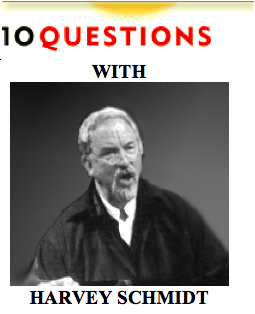
Fynsworth Alley: 10 Questions with Harvey Schmidt

Originally published on Fynsworth Alley.

10 Questions with Harvey Schmidt

What was your involvement in the film version of The Fantasticks?

After years of turning down offers, of waiting and hoping that some day, some film director would come our way with a vision that we might approve on just how to turn what is very much a stage piece into film, Michael Ritchie came along and presented us with such a proposal. So Tom and I were engaged to work on the screenplay and to also be on call for whenever Michael wanted us around, whether it be recording sessions, location shooting in Arizona, or final editing sessions in Los Angeles and New York.

Is there any truth to the rumored Broadway revival of I Do! I Do! with Kathie Lee Gifford?

Up till now I have only heard the same rumors that everyone else seems to have heard. Having long been a fan of hers, I think she could be a perfect “Agnes” in this show, so I would be delighted if the rumors should turn out to be true. Continue reading

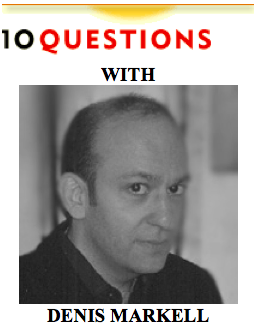
Fynsworth Alley: 10 Questions with Denis Markell

Originally published on Fynsworth Alley.

10 Questions with Denis Markell

How did your songs end up on Broadway Bound

Michael Kerker, the indefatigable head of ASCAP’s musical theatre division, called my writing partner Douglas Bernstein and suggested we send in a tape. Many months later, a phone call came in saying “Boys, you’re in!” Sadly, that was a crank call. Months after that, ANOTHER call came in saying “Is this Douglas Bernstein? I’m Bruce Kimmel and I’m heartened by your songs.” Bruce let us know he was planning on taking three of our songs for the CD.

Do you write exclusively with Doug Bernstein? How did you two find each other?

Doug and I found each other at a music camp, when he was sixteen and I was seventeen. Anyone humming Rodgers and Hammerstein right now (and you know who you are) stop it. It’s been done. We stayed friends, and ended up both going to Amherst College. Upon arrival in New York, (or return to New York – we both grew up here) I went into the BMI workshop, where I wrote by myself. I was also paired with a few other people, but those experiences were more frustrating than inspiring. At some point the opportunity presented itself for Doug and I to write together (for Upstairs At O’Neal’s) and from that point on, the majority of our writing for the theatre has been together.   Continue reading

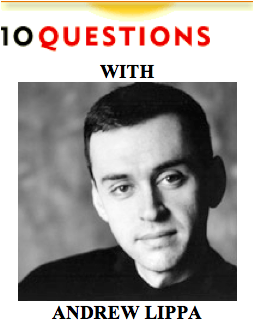
Fynsworth Alley: 10 Questions with Andrew Lippa

Originally published on Fynsworth Alley.

10 Questions with Andrew Lippa


How do you feel about being grouped as part of the much talked about “next generation” of Broadway writers?

I think the grouping of people comes from the needs of newspaper/column writers to give some kind of organization to things. Probably the only reason we are grouped together is that we’re a gang of people who have been consistently produced in New York. But, of course, that doesn’t account for people who’ve created some great stuff. Steven Trask (Hedwig) comes to mind as someone I haven’t read much about who wrote a great score. And I don’t think he’s included in that “next generation” stuff. Admittedly, it’s always nice to be talked about but there’s not much to the discussion other than pointing out that there ARE a group of really gifted younger writers who want to write musicals. That in itself is cause for celebration!

What’s your next writing project?

I’m writing several things right now. First is a new musical called Enchant with bookwriter Betsy Pool. I don’t really want to say what it’s about yet but it’s based on a screenplay by Betsy and it’s a very musical idea in that a lot of the characters sing by profession (though it’s not a backstage musical either). Curious? Well, once we’ve written a draft I’ll be a little more willing to talk about it. The other project is a movie called A Whatnot Christmas for which I am writing the songs and score. It is being directed and written by Mitchell Kriegman and will be released next year. It’s done with puppets and computer animation and I’m in the process of writing and recording the songs right now.

What’s your role in the upcoming Cinderella tour, and how did that come about?

I’m the musical supervisor and arranger for that tour. Gabriel Barre (who directed The Wild Party) is directing and asked if I would come on board. It’s been fun to work with such great music and to re-think it to fit into a new book and a new production. This is the first first-class production of this show so it’s got some excitement around it.   Continue reading

Fynsworth Alley: 10 Questions with Rupert Holmes

Originally published on Fynsworth Alley.

10 Questions with Rupert Holmes


With his hit Broadway musical The Mystery of Edwin Drood, Rupert Holmes became the first person in theatrical history to be the sole winner of Tony Awards for Best Book, Best Music and Best Lyrics, with Drood also winning the Tony for Best Broadway Musical. After a record-breaking run in Los Angeles, the Broadway production of Holmes’ comedy-thriller Accomplice starring Jason Alexander and Michael McKean won the coveted “Edgar” Award from The Mystery Writers of America. His tour-de-force for actor Stacy Keach, Solitary Confinement, also set a new Kennedy Center box-office record. For the last five years, Holmes has created and co-produced the critically-acclaimed, Emmy award-winning television series Remember WENN. His latest play based on the life of George Burns (produced with the endorsement of the Burns & Allen estate) entitled Say Goodnight, Gracie starring Frank Gorshin is an out-of-town smash and will be coming shortly to New York. Currently he is collaborating with Broadway legends Charles Strouse and Lee Adams on a musical adaptation of the Academy Award-winning motion picture Marty… finishing his own epic musical based on Oscar Wilde’s The Picture of Dorian Gray… and completing his first novel for Random House. Holmes’ popular songs have been recorded by many of our greatest vocalists, most notably and frequently Barbra Streisand, for whom he has written, arranged, conducted and produced multi-platinum albums, including Lazy Afternoon and his songs for the Grammy Award-winning soundtrack of A Star Is Born. He is still probably best known to the general public as the singer and songwriter whose multi-platinum recordings include several Billboard #1 hits.

You’re both a writer and a performer. Are you more comfortable in one than the other, and how do those roles affect each other?

Let’s make those questions one and two.

One: in all my years of performing, no audience member has ever actually assaulted me. I consider this to be the singular triumph of my performing career. I did win “Best Performance” at the Yamaha World Popular Song Festival and I assumed I’d receive a motorcycle. I got a medallion instead. It burns very little gas.

The truth is, I initially became a singer-songwriter while still in my teens because it was the only way to guarantee that somebody on earth would sing the songs I was writing. Since then, I’ve performed just about everywhere: rock clubs, concerts halls, arenas, TV… when I wrote the score for the movie No Small Affair they also had me play a bandleader who had five lines of dialogue with Demi Moore. (When people ask me what the film was about, I shrug, “Oh, it’s about a bandleader.”)

So I’ve always been comfortable performing. But if I had to choose between being a performer of other people’s work or a writer of words and music for other people to perform, I’d definitely opt for the latter.  Continue reading

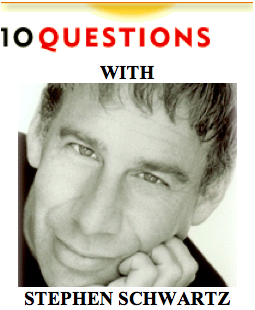
Fynsworth Alley: 10 Questions with Stephen Schwartz

Originally published on Fynsworth Alley.

10 Questions with Stephen Schwartz


In addition to being a writer, you’re also a director and occasionally a performer. How do you think these roles affect each other in your work?

I think it’s extremely useful for writers (for theatre) to have some knowledge of what a performer has to go through in order to make material work. Long before I was doing my little singing gig, I had said that the most single useful course that I took at Carnegie Mellon, where I went to school, was an acting class. And even though I’m quite a poor actor, I thought that learning about what actors had to do and what that was about was extremely useful in writing material that was meant to be acted. Similarly, I think it’s obvious to say that having experience as a director is useful in writing material that’s meant to be staged. It’s good if you can actually write something that’s stageable.

What is the last Broadway CD you’ve listened to?

I’ve listened to one recently that I loved and I’m happy to endorse: Andrew Lippa’s The Wild Party, which I loved and recommended highly. Continue reading

Fynsworth Alley: Dorothy Loudon: She’s Still Here

Originally published on Fynsworth Alley.

dorothy loudonWe often hear stars referred to in hyperbolic terms, but Dorothy Loudon is the real thing: a Broadway legend. Best known for her Tony-award winning performance as Miss Hannigan in the original cast of Annie, Dorothy’s career has spanned radio, television, cabaret, theatre, and film. Recently, Dorothy shared with me some of her showbiz memories and discussed her track on THE STEPHEN SONDHEIM ALBUM, “I’m Still Here.”

David: How did you get your start in show business?

Dorothy: After my sophomore year at Syracuse University, I left – on the advice of my drama coach – and came directly to New York City. I lived in a girls’ club and auditioned for anyone who would listen. My first job was in a tiny club called “Jimmy Ryan’s,” where I sang and accompanied myself on the piano. One night, Jackie Gleason came in with his musical conductor, Ray Bloch. I guess they were impressed, because Mr. Bloch put me on CBS radio, where I was heard nationally every Friday night. From that time on I never stopped working. That was before television. That was fifty years ago. I was a very lucky girl.

David: You were a fixture of the 1950s cabaret scene in NY. Has the cabaret scene changed much? How? What was it like back then, doing shows in the boites?

Dorothy: The cabaret scene has changed tremendously since the fifties and sixties when I was there. People “dressed up” for the occasion. Tuxedos, gowns, “the works”.

On a typical night at “The Blue Angel,” I would appear on a bill with Johnny Mathis (opening act), Jonathan Winters, Phyllis Diller, Mike (Nichols) and Elaine (May) – and Bobby Short was playing in the lounge!

Television came along and literally wiped out the supper clubs. Now, people could sit at home, turn on their sets and see all those people in their own living rooms. What’s more, they could watch in their pajamas, and there was no cover charge.

David: How did your role on the Garry Moore show come about?

Dorothy: One day I got a call from the Garry Moore Show – Gwen Verdon was to have been their guest star, but she had the flu and couldn’t make it. It was two days before the show and they were desperate. I had auditioned twice for the show — and was turned down. I jumped at the chance. In two days I learned the sketches, songs, choreography… and went on for Gwen. That night, after the show, Garry offered me a three year contract.

David: Was that your “big break”?

Dorothy: It turned out to be the biggest break of my career.  Continue reading