JewishBoston.com: From Brookline to the Big Time: Eli “Paperboy” Reed Makes Major Label Debut

Originally published on JewishBoston.com.

created at: 2010-08-25A number of years ago, I received an excited phone call from a friend. “You’ve got to hear this guy I just met,” she enthused. “He’s a little Jewish kid from Brookline who sings soul like the best of Motown.” She was talking about Eli “Paperboy” Reed, the baby-faced Bostonian who’s been one of Massachusetts’s best-kept musical secrets for years.

That’s finally starting to change, with the release of his first major-label album, Come and Get It!, which debuted from Capitol Records a couple of weeks ago. If you’re already a fan, you’ll be delighted to find exactly what you’ve come to expect from Eli and his band, the True Loves: exciting rhythm & blues music that bounces from explosive excitement to palpable yearning, backed by the best horn section this side of Blood, Sweat & Tears.  Continue reading

JewishBoston.com: Wines, Whines, and Amy Winehouse

Originally published on JewishBoston.com.

created at: 2010-08-20Jews, on the whole, aren’t known for our alcohol consumption. Sure, we might drink a l’chayim when there’s something to celebrate, but as far as excesses go, the stereotypes trend more towards shopping and world-domination and away from libation.

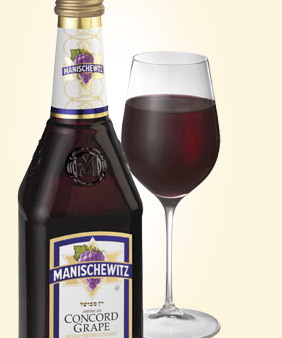
But every once in a while we can kick back and party with the best of them. Heck, the holiday of Purim practically makes imbibing a mitzvah! And for many of us, when we think about Jews and drinking, the conversation naturally steers towards Manischewitz, the line of super-sweet wines that make every Passover seder and Shabbat dinner complete.  (Interesting note: Jews aren’t the only people with a strange love for the stuff – apparently it’s popular in Haiti as well.  Who knew?)

But if you’re like me, and you prefer to drink something with a little more, shall we say, nuance and depth than Manischewitz (the alcoholic equivalent of Cheezwhiz), you don’t have to pour out all those bottles of Concord Grape and (my favorite) Extra Heavy Malaga just yet. The internet is here to help! (God bless the internet.)

A little googling reveals something called the Manischevetini.  This is a Real Thing. Multiple websites offer the recipe. Few extol its virtues. Proceed at your own caution, but if you do make one of these, please report back in the comment section below.

But beware – the Manischevetini might prove addictive and turn you into this:

(Big hat tip to our Australian friends at jew on this for bringing this video to our attention.)

Shababt shalom, everyone!

P.S. None of the above is meant to belittle the very real problem of addiction in the Jewish community. Now is as good a time as ever to mention JACS, the organization for Jewish Alcoholics, Chemically Dependent Persons, and Significant Others. If you or someone you know needs help, this is a good place to start.

P.P.S. If you didn’t click on the very first link in this post, you missed out on a Japanese production of Fiddler on the Roof and your life is all the poorer for it.

JewishBoston.com: Pomegranates: Not Just for Trendy Juice Drinks

Originally published on JewishBoston.com.

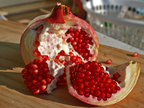
created at: 2010-08-06A few years ago, the pomegranate exploded on the food scene as the in fruit of the moment. From the juice aisle to the bar, it was hard to avoid the bright red color of the pom.  Oprah even declared the Pomegranate Martini as one of her favorite drinks!

Although it’s as difficult to prepare as it is to spell, the flavorful seeds and much-hyped health benefits of the fruit have brought it into the mainstream. Naturally, there’s now an official Pomegranate Council promoting all these benefits and more on behalf of the California farmers who produce pomegranates in the USA.

created at: 2010-08-06But it turns out the mainstream was just catching up with something Jewish tradition already knew.  We’ve held the pomegranate in high regard for quite a while — since the time of the Bible, in fact! Pomegranates have been a feature of Jewish art as well as cuisine for generations. In fact, the adornments some synagogues place on the handles of Torah scrolls are even called rimonim in Hebrew — that would be “pomegranates” in English!

Pomegranates have a particular connection to Rosh Hashanah. According to About.com:

On the second night of Rosh Hashanah, we eat a “new fruit” – meaning, a fruit that has recently come into season but that we have not yet had the opportunity to eat. When we eat this new fruit, we say the shehechiyanu blessing thanking God for keeping us alive and bringing us to this season. This ritual reminds us to appreciate the fruits of the earth and being alive to enjoy them.

A pomegranate is often used as this new fruit. In the Bible, the Land of Israel is praised for its pomegranates. It is also said that this fruit contains 613 seeds just as there are 613 mitzvot. Another reason given for blessing and eating pomegranate on Rosh HaShanah is that we wish that our good deeds in the ensuing year will be as plentiful as the seeds of the pomegranate.

created at: 2010-08-06

I remember back in my Hebrew School days participating in an activity with my classmates where we tried to count all 613 seeds of the pomegranate. It was messy and not entirely successful, but fun enough that I remember it more than two decades later.

This year, I learned that there’s also a mystical connection between the pomegranate and Rosh Hashanah – it’s one of the simanim, or good omens, that Jewish superstition associated with loading the odds in our favor for a good year.  We’ll have more about the simanim in an upcoming blog post.

Do you have a favorite recipe for enjoying pomegranates?  Please share it in the comments below!

Pomegranate photo by Fir0002/Flagstaffotos, used under the GFDL license.

Torah photo by Dan Simhony.

Postage stamp photo by Karen Horton.

JewishBoston.com: Sad Days of Summer

Originally published on JewishBoston.com.

Not having grown up going to a Jewish summer camp, I’ll admit to total ignorance of the summer season of the Jewish calendar until much later in life. However, it turns out you don’t have to wait for Rosh Hashanah to participate in Jewish holidays — the summer is loaded with them!

However, you’ll note I didn’t say “celebrate” holidays. Prior to the camping movement, it seems that summer was not so good for the Jews. In fact, Jewish tradition recounts that nearly all the tragedies that ever befell our people, up to and including the destruction of both Jerusalem Temples, happened over the summer. Jews memorialize these great losses on Tisha B’Av, the 9th day of the Hebrew month of Av, which this year falls on July 20th (beginning, as Jewish days tend to do, on the previous evening).  More on that in a couple of weeks. Watch this space. Continue reading

Jewschool.com: Jewnteenth

Originally published on JewishBoston.com.

Juneteenth image from the Smithsonian InstituteJune 19th is celebrated across the United States and around the world as Juneteenth, the anniversary of African-American emancipation in this country. Although the Emancipation Proclamation was issued in September and went into effect in January, many slaveholders in the south simply ignored it. The date of Juneteenth commemorates the June 18th and 19th taking of the state of Texas by the Union army under General Gordon Granger, who publicly announced the end of slavery, inspiring public celebrations among the newly freed slaves. Three years ago, Massachusetts became the 25th state to recognize Juneteenth as a holiday; 11 more have since followed suit.

I had never really contemplated Juneteenth from a Jewish perspective before this year. A few months ago, my friend Ingrid phoned me excitedly from her home in LA. “Juneteenth falls on Shabbat this year,” she told me, “so I’m going to host a Jewnteenth seder!” As someone who is both Jewish and African-American, Ingrid was thrilled to carve some space into the calendar that spoke to both elements of her identity. Modeling her Shabbat dinner after the Passover seder seemed natural, since both Passover and Juneteenth celebrate freedom from slavery.

As she spread the word among her friends, she found that many had never heard of Juneteenth before, never mind Jewnteenth. Ingrid insisted to me that was because Juneteenth celebrations are more common on the east coast, although the Juneteenth World Wide Celebration web site lists a dozen events in California and only two in Massachusetts. My searches on Google and Twitter today have not uncovered any Boston-area Jewnteenth events at all.

So whether you’re part of an organized celebration or not, this weekend is a great opportunity to reflect on the freedoms we share as well as the work still left to do to ensure equal rights for all. And if you’re not already familiar with the racial diversity within the Jewish community, you can check out the work done by such organizations as The Jewish Multiracial Network and Be’chol Lashon (In Every Tongue).

Don’t Tell Me I’m Next

On June 6, 2010, Hebrew College celebrated its 85th commencement. I graduated with two masters degrees: one in Jewish Studies, the other in Jewish education. I was incredibly honored to be one of two student speakers at the graduation ceremony. What follows is the speech I delivered at graduation.

My relationship to Hebrew College is somewhat different from many of my fellow graduates, although far from unique in the history of the school. I am a graduate of Prozdor, the high school of Hebrew College – class of 1995; I am now the associate director of Prozdor and the director of Makor, Hebrew College’s middle school collaboration with community congregations; and today I am graduating with both the Masters Degree in Jewish Studies and the Masters in Jewish Education. Hebrew College has been many things to me – the birthplace of many important friendships; a laboratory for testing out Jewish ideas; a supportive environment for professional growth; and most importantly a family.  It is particularly meaningful that my graduation is also a day honoring Dr. Stephen Simons, who was my first supervisor and cheerleader in the world of professional Judaism when I worked at Congregation Mishkan Tefila, as well as Margie Berkowitz, who was my teacher when I was a teenager, and before that my mother’s camp counselor at Camp Yavneh, but most importantly, a dear friend and beloved colleague and mentor. My first week on the job at the college, I attended the brit milah of Margie’s youngest grandchild; yesterday I celebrated with her family the bar mitzvah of one of her eldest; it’s fitting that my time at the college is book-ended by these smachot, these family celebrations, because when we refer to Prozdor as a family, we really mean it.

Earlier this year, when it became clear that I would, in fact, complete my degrees this June, people began asking me about what would come next. I’m sure many of my classmates fielded the same question. Now, I’ve been taking classes part-time for eight years towards these degrees, so to be honest, it hadn’t occurred to me that graduation might necessitate a next step.

In retrospect, this should have been obvious. The Jewish community is in a state of perpetual anticipation. Maybe this is a natural state for a people waiting for the messiah. I came of age in the era of “Jewish Continuity,” when federations around the country feared that the forces of assimilation were laying waste to Judaism at such a rate that Jews might not be around in a couple of generations if we didn’t take action. While researching my masters thesis, I learned that this was not a new communal stance, just a new label.  In my parents’ generation, the call to arms was “Jewish Survivalism.”  Today, we instead talk about strengthening Jewish identity. But whatever you call it, these phrases all tend to mask the same shared anxiety: will there be Jews left on earth after we’re gone. Continue reading

Jewschool.com: Augmenting Jewish Reality

Originally published on Jewschool.com as part of the 28 Days, 28 Ideas project.

28 Days, 28 Ideas Blog Partner Remember a year or two ago when GPS technology started being added to cell phone applications? Many of us scoffed at the idea of being trackable by Big Brother or God knows who else, imagining the worst case scenarios of a privacy-free world. Fast-forward to today, and we can’t imagine walking from the subway to a meeting at an unfamiliar location without whipping out our phone and asking Google Maps to guide us, and when the meeting is over, we ask Google Local to guide us to the closest bar with a happy hour.

Well, my friends, Augmented Reality is the next feature coming to your phones that you won’t be able to live without. At its most basic, AR technology allows you to point your phone’s camera lens at objects in the real world to conjure all sorts of information related to it on your screen. The Boston Globe had a great introduction to the technology published in September.

Here's what an Augmented Reality app might look like on your phone!AR technology has many potential applications in Jewish life. The most obvious to me fall in the categories of preservation of memory. Imagine walking through a Jewish cemetery and having instant access to biographical information, photographs, videos, family trees, and more, all available on your phone simply by focusing your camera on a particular headstone. Or envision a tour through the Lower East Side where every building unlocks an oral history from the people who grew up, lived, and worked there. Or think about all those portraits hanging on your synagogue’s walls — wouldn’t it be great to hear your beloved old cantor sing once more, simply by pointing your phone at the painting of him?

Now, I’m an educator, not an engineer. I don’t know how ready our current generations of phones are for this now, but if we’re not there yet, we will be there soon. The real hurdle I see is getting all this information compiled and ready to be accessed. What I propose — although Lord knows I’m not the one capable of making it happen — is a standardized, user-friendly platform developed for Jewish communal use. From the end-user’s point of view, the platform would need to be a free, easy-to-install (and easy-to-use) app available for all the major hand-held devices. From the perspective of Jewish institutions, the interface needs to be as simple as taking a picture of the object and then filling out a template with text, graphics, and videos, no more complex than the system Facebook employs for posting any of those things from the status update box. (I recognize there are probably some hurdles to clear in terms of making the AR app recognize objects more complex than two-dimensional pictures based on amateur photography, but let me dream for a moment.)

Of course, because I am an educator, I see great educational opportunities opening up with this software. Recording the oral histories, researching and writing up the narratives, compiling and editing appropriate graphics and photographs to augment our various realities could be excellent projects for Hebrew High school classes, organizational interns, adult volunteer groups, and others (not to mention trained historians). Because all these organizations would be working on the same platform, a Wikipedia-style collection of related information could be accessed from related objects half a world away. Perhaps a clever programmer could even aggregate existing information from existing sites like Wikipedia, MyJewishLearning, etc. For example, the US Holocaust Memorial Museum in Washington, DC and Yad Vashem in Jerusalem could pool their resources — which could then also be linked to by a teenager in Nashville who’s adding AR tags to the Nashville Holocaust Memorial as part of his Eagle Scout project.

AR doesn’t only lend itself to history projects. Imagine a Tzedakkah Gallery in the lobby of your JCC, with exhibits highlighting the work of several great non-profits. Point your phone at the one your like best to load a screen that lets you make a donation. What about a game that encourages your Birthright Israel trip to put down their beers to follow a trail of hidden clues (visible only by pointing your phone at the sites hinted at in previous clues) through a historic neighborhood in Israel? On a more commercial level, wouldn’t it be great to preview the music and videos on sale at the Jewish Book Store by simply aiming your phone at them?

Like I said, I have no idea how to make this happen, but I’m sure one of our readers out there in Jewschool-land has the expertise to program this in one really long, Redbull-fueled evening. I’m not asking for anything, other than the opportunity to be one of the first to start tagging the Jewish sites around Boston and enriching the educational opportunities available to anyone with a phone in her pocket.

This post is part of the series 28 Days, 28 Ideas. Check out yesterday’s idea, The Plan B Institute for a Jewish Future over at 31 Days, 31 Ideas. And be sure to check out tomorrow’s idea at JTA’s Fundermentalist blog. 

Jewschool.com: My Flip Camera May Not, In Fact, Be God

Originally published on Jewschool.com.

Okay, I promise this is my final post about Everything Is God: A Jewish Spiritual Woodstock, the event held Sunday night at Harvard Hillel. Jewschool doesn’t often cosponsor real, live events up here in Beantown, so you’ll forgive me for being a little more excited than usual at getting to represent us out there “In Real Life” as the kids say.

Let me start by saying that as excited as I was to fly the Jewschool flag, I was somewhat suspicious of the event itself. I tend to sneer at the kind of spirituality that comes with chanting and meditating and crystals and beads and what-have-you, and that’s sort of what I expected to be bombarded with here. After all, I know that Jay Michaelson is prone to running off to Tibet for a month of silent contemplation, and Seth Castleman has built his career on bringing the Dharma and the Torah together. I know that Danya holds a torch for the kind of traditional Jewish spirituality that I both crave and mock, although from reading her memoir I know that she’s adopted the lotus position herself on more than one occasion.

So let me be the first to say that the event was not that at all. Sure, Danya and Jay disagreed on whether aromatherapy bath crystals can really be considered spiritual tools, but the discussion was much more focused on the interplay between “religion” (i.e. the structures & strictures, rituals and communities of organized faith) and “spirituality” (what Danya calls the moments of feeling groovy). (Incidentally, if you were hoping for more of an exploration of how your boogers embody God, Jay is holding a series of conference calls for folks to come together in exploration of the non-dual Judaism he espouses in his book.)

Continue reading

Jewschool.com: Tu BiShvat Higia, Chag Hailanot!

Originally posted on Jewschool.com.

Early this week on Twitter, David A. M. Wilensky asked why people get so excited about Tu BiShvat. Two rather mundane but honest answers are that for those who are into Kabbalah (and I am decidedly not one of those), it’s a moment in the spotlight for their favorite elements of Judaism, and for those who are Jewish educators (and I am decidedly one of those), it’s a holiday that fills the dead time between Hanukkah and Purim.

Personally, I could take or leave the holiday. I like fruit as much as the next guy. Strike that. I like fruit more than the next guy (as anyone familiar with my biography and tendency towards bad puns can attest). But my disinterest in Kabbalah and unease with the ways the holiday has been claimed by everyone from Zionists to Ecologists make it hard for me to get a firm grounding on what the holiday might mean to me.

However, we all know I like food. And when Tu BiShvat falls on Shabbat, as it does this year, I love the chance to build a Shabbat menu around fruit. Back in 5763 (aka 2003), when I was in my first year as a full-time Jewish educator, Tu BiShvat also fell on Shabbat. The shul where I worked had a very successful monthly community Shabbat dinner event. I asked if I could take the lead for the month when the dinner would coincide with the so-called birthday of the trees.

I was met with some skepticism. “Our congregation loves the dinners as they are. We don’t want any programming,” I was told. “Don’t worry,” I assured them. “I’m talking about menu and decorations. You won’t even know that you’re taking part in a Tu BiShvat seder.”

Kids' PlacematHaving made the bold claim, and not entirely sure how I was going to back it up, I got to work with my partner-in-crime, Robin Kahn, then the synagogue’s family educator. We bought up every mylar tree that iParty had for sale. We made up vertical seder plates with four levels, representing the four Kabbalistic spheres the seder traditionally mentions. One set of plates was filled with the expected fruits (the top level being left empty, natch). The other filled with dips like hummus and olive tapenade, because we’re classy like that — and because it gave us a second set of surfaces on the table to which we could affix labels. A third set of four bottles of soda or juice (representing the color spectrum from red to white) gave us our third canvas. The labels we places on each level, each bottle presented all the information of the seder in small, non-threatening and non-invasive chunks. (And lest you think I forgot about the שבעת המנים, the seven types of grains and fruit grown in Israel linked to the holiday, we had crackers made of barely & wheat to complement the rest of the fruits & dips on the seder plates.)

Our crowning achievement was the placemats we created. They were double-sided, with one side aimed at kids featuring a word search, a Cosmo-style “What Kind of Tree Are You?” quiz, and more. The adult side included a timeline detailing the evolution of the holiday from the time of the Second Temple though today, some text about the mitzvah of baal tashchit, and the words to the song השקדיה פורחת. No one had to look at the placemats if they weren’t interested, but to load the deck in our favor, we set the table with transparent plates and cutlery.

Placemat for Grown-UpsThe dinner was a success, both from a culinary standpoint and an educational/programmatic one. Today I printed out a new set of those placemats to use this Shabbat. It’s weird to look back at something from so early in my career — I admit to going through and changing the way I spelled the name of the holiday (thanks, BZ!) (although now I noticed I missed a spot). But I’m still proud of the work Robin and I did. And today it serves as a reminder to me that Jewish education can touch even those most resistant to it if we approach it with a little creativity and a lot of office supplies.

If you’d like to use my placemats at your Tu BiShvat table this year, feel free! here’s the adult version and here’s the one for kids.

Jewschool: The Vort: Vayechi – Endings and Beginnings

Originally published on Jewschool.com.

I’ve always been something of a post-modernist, fascinated particularly with the ways in which form and content intersect, interact, support and destabilize each other. Blame it on an early obsession with Stephen Sondheim from an early age. (Yes, folks, that link is a peek into dlevy’s early high school adventures on the internet. But I digress.)

And the seasons, they go round and round...With that in mind, I find it particularly delightful to encounter parshat Vayechi during the week that our secular calendar advances a page. You see, the content of this week’s Torah reading involves Jacob putting his affairs in order at the end of his life, bestowing blessings on his sons (but not his daughter) and two grandsons (you can guess whose progeny they are) before shuffling off this mortal coil. But the form — oh, the form! First we’ll notice that this is the final nugget of Sefer Bereshit (aka Genesis, not the Peter Gabriel/Phil Collins band), the first book of the Torah. When this story ends, we get a flash forward to everybody’s favorite Easter Passover story, The Ten Commandments Sefer Shemot (aka The Book of Exodus, no not the Leon Uris one). That’s a new book – same scroll, but with a nice big, clear differentiation in the text. Plus, we divide our reading up so that we don’t get into that story until next week. And in case anyone wasn’t sure, we’ll all leap to our feet on Saturday morning and sing “חזק חזק ונתחזק” to punctuate the end of our current book. So between the end of the patriarchal era (ha! as if!), the end of the book of Genesis, and the rhythm of our Torah reading that keeps us from reading the next chapter until (at the very least) later on in the afternoon, we’ve got a nice, tidy ending to our story. Continue reading